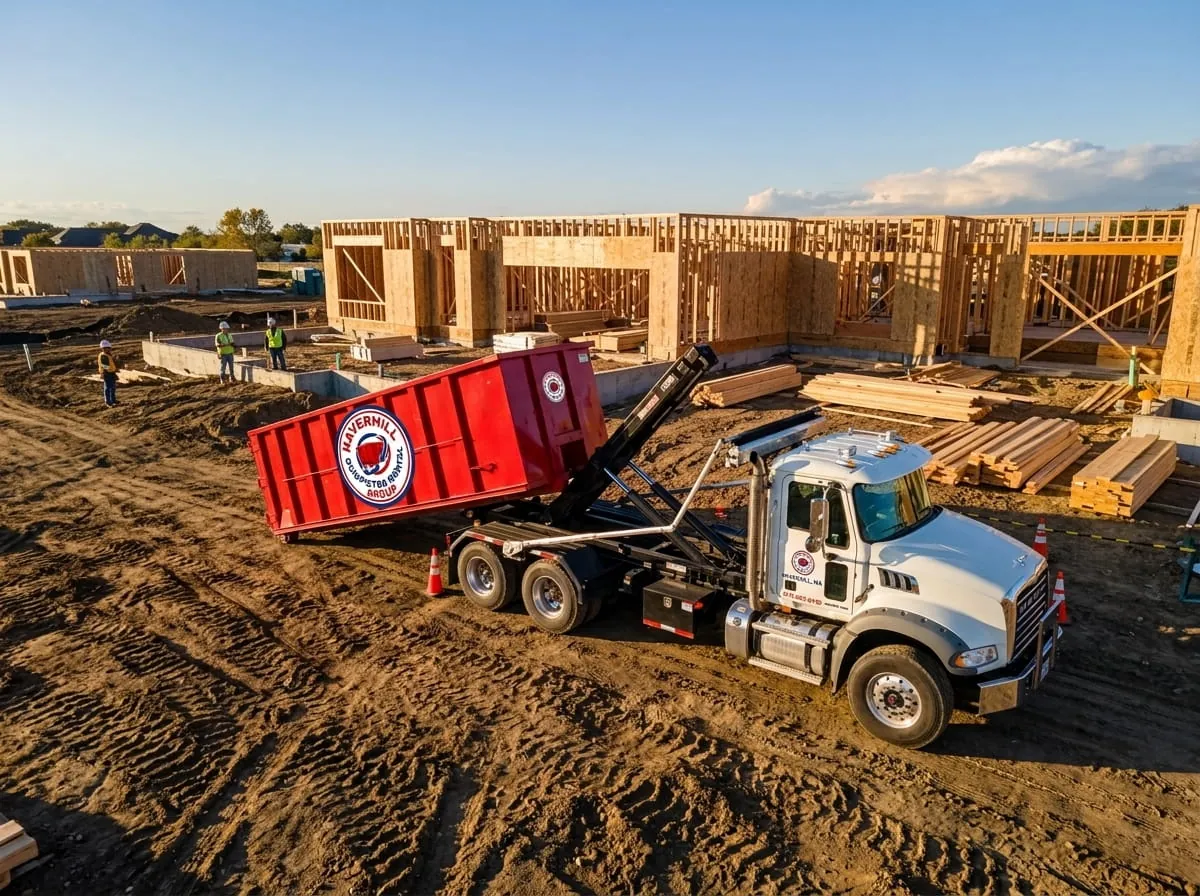
If you have ever tossed a single bundle of asphalt shingles into the back of a truck, you already know the truth that trips up so many Haverhill homeowners: shingles are deceptively heavy. A roof looks flat and thin from the ground, but a tear-off produces one of the densest debris loads in all of home renovation. Choosing the right dumpster for that job is less about how much space the debris takes up and more about how much it weighs. Get it wrong, and a bin that looks half-empty can still put you over your weight limit and into overage-fee territory.
At Haverhill Dumpster Rental Group, we drop roofing bins across the Merrimack Valley every week, and the same lesson repeats itself: a right-sized 10 or 15 yard dumpster that stays within its weight allowance almost always beats an oversized bin you can never legally fill. Here is how to think it through.
Why Roofing Debris Is So Heavy
Asphalt shingles are made of a fiberglass or felt mat saturated in asphalt and topped with mineral granules. That granule-and-asphalt combination is what makes them weatherproof for decades, and it is also what makes them heavy. Roofers measure roofs in squares, where one square equals 100 square feet of roof surface. A single square of standard three-tab shingles weighs roughly 200 to 250 pounds. Architectural (dimensional) shingles run heavier, often 350 to 450 pounds per square.
Now multiply that across a whole roof. A modest Haverhill Cape with about 15 squares of a single layer of architectural shingle can shed well over 2.5 tons of debris before you add a scrap of underlayment, flashing, or rotted decking. That is why a roofing load fills a dumpster by weight long before it fills it by volume.
The core rule: Size a roofing dumpster by the weight of your shingles, not by how big the pile looks. A 15 yard bin filled with shingles can weigh more than a 30 yard bin filled with couch cushions.
Count Your Squares and Your Layers
Two numbers drive everything: how many squares of roof you are removing, and how many layers of shingle are up there.
Squares
You do not need a perfect measurement. Roofers estimate squares from the roof's footprint and pitch, and most homeowners can get close by asking their contractor or checking an old roofing invoice. As a rough guide, a typical single-family Haverhill home lands somewhere between 15 and 30 squares.
Layers
This is the New England wrinkle that surprises people. For decades, it was common practice to shingle right over an existing roof rather than tear it off. Plenty of older homes in Haverhill, Bradford, and the surrounding Merrimack Valley are carrying two or even three layers of shingle. Every extra layer roughly doubles or triples the tonnage coming off the roof.
Before you rent anything, have your roofer confirm the layer count. A 20-square roof with one layer and a 20-square roof with three layers are completely different weight problems, even though the roof surface is identical. If you are unsure how the math shakes out for your specific project, our guide on what size dumpster you need walks through the estimating steps in plain language.
Roof Size to Suggested Bin: A Quick Reference
Use this table as a starting point. It assumes standard asphalt shingles and factors in the weight-based nature of roofing debris. Multiple layers push you toward the larger bin or a heavier weight allowance, so always tell us your layer count when you book.
| Roof Size (Squares) | Layers | Suggested Dumpster | Notes |
|---|---|---|---|
| Up to 15 squares | 1 layer | 10 yard | Ideal for garages, small Capes, and single-slope roofs |
| 15 to 25 squares | 1 layer | 15 yard | The workhorse size for most Haverhill homes |
| Up to 15 squares | 2 to 3 layers | 15 yard | Extra layers add weight; size up even on a small roof |
| 25 to 30 squares | 1 layer | 15 yard (with higher weight allowance) | Volume fits, but confirm tonnage to stay within limits |
| 25+ squares | 2 to 3 layers | Two bins or staged swap-out | Heavy multi-layer jobs often need more than one haul |
Notice what the table is really telling you: roofing rarely calls for the giant 30 or 40 yard containers people associate with big projects. Those large bins have plenty of room, but you would hit the weight ceiling with the container barely a third full, which is wasteful and can still trigger overage charges. A 10 yard dumpster or a 15 yard dumpster with a weight allowance matched to your shingle tonnage is almost always the smarter, cheaper choice.
Why a Right-Sized Bin Beats an Oversized One
It feels counterintuitive. Bigger sounds safer. But roofing dumpsters are priced and hauled around weight, and here is what a right-sized 10 or 15 yard bin gets you:
- Lower base cost. Smaller bins rent for less, and for a weight-limited load you are not paying for space you cannot use.
- Easier placement. A compact bin fits on a driveway or close to the house, which matters enormously when your crew is dropping shingles from the roofline.
- A clear weight target. When you match the bin's weight allowance to your squares and layers, you have a defined budget for tonnage rather than a giant container that tempts everyone to keep piling on.
- Fewer surprises. Predictable weight means predictable cost, with no gut-punch overage fee after the haul.
The one honest exception: very large multi-layer tear-offs. When you are pulling three layers off a 28-square roof, a single small bin cannot hold the tonnage, and the right answer is either two bins or a staged swap-out where we haul away the full one and drop a fresh empty. We will tell you straight if that is your situation.
Place the Dumpster Close to the Work, on Boards
Roofers work fast, and gravity is doing most of the hauling. The closer the dumpster sits to the base of the roof, the more shingles land in the bin instead of on your lawn or driveway. When you book, think about which roof planes are coming off and stage the container on that side of the house.
Two placement tips save headaches:
- Lay down boards or plywood. Placing the dumpster on planks protects asphalt driveways and paver surfaces from the container's weight and from any scraping during drop-off and pickup. We are happy to set the bin on boards you provide.
- Leave a clear drop zone. Move cars, grills, and patio furniture out of the fall path. Loose shingles slide, and a clear perimeter keeps your property and the crew safe.
For a deeper look at how we support roofing crews specifically, our roofing dumpster rental service page covers placement, weight allowances, and scheduling in detail.
Weather and Timing in the Merrimack Valley
New England weather does not cooperate with roofing schedules, and wet shingles make everything worse. Asphalt shingles absorb water, so a load that gets rained on before pickup can gain hundreds of pounds and push a borderline bin over its weight limit. A few timing habits go a long way:
- Coordinate the tear-off with a dry window. Most roofers watch the forecast closely; align your dumpster delivery with the days they actually plan to strip the roof.
- Keep the bin covered if rain threatens. A tarp over a loaded roofing dumpster keeps the shingles from soaking up weight while they wait for haul-out.
- Book the swap or pickup promptly. The longer a full bin sits through Merrimack Valley weather, the more moisture it can pick up. Fast turnaround protects you from weight creep.
Working With Your Roofer
The smoothest jobs happen when the homeowner, the roofer, and the dumpster company are all reading from the same page. Ask your roofing contractor three questions before you book:
How many squares are we removing?
This sets your baseline volume and weight.
How many layers are up there?
This is the multiplier that decides whether a 10 yard bin is plenty or whether you need a 15 yard or a swap-out.
Which side of the house should the bin sit on?
Match placement to the work so shingles land in the container, not on the ground.
Some roofers include the dumpster in their bid and handle it for you; others expect the homeowner to arrange it. Either way, when you call us with your squares and layers, we can recommend the right bin and weight allowance in about two minutes. Many local roofers already work with us, so if your contractor prefers, we can coordinate delivery directly with their crew.
Avoiding Overage Fees
Overage fees happen for one reason: the load weighed more than the rental's included allowance. Roofing is the single most common project where this bites, precisely because shingles are so dense. Protect yourself by:
- Sizing by squares and layers, not by how the pile looks.
- Being honest about multi-layer roofs up front so we can set the right weight allowance.
- Keeping the load dry.
- Not mixing in extra debris. Toss the old deck, fencing, and yard junk in a separate general-purpose bin so they do not eat into your roofing weight budget.
When the weight allowance is matched to the job from the start, overages simply do not happen. That is the whole point of sizing correctly.
Ready to Size Your Roofing Dumpster?
Roofing is one of those projects where a two-minute phone call saves real money. Tell us your roof's squares and layers, and we will point you to the bin that fits the weight, place it close to the work, and keep your project moving. Call Haverhill Dumpster Rental Group at (978) 519-7313 for a straight answer on the right size, or reach us through our contact page. We serve Haverhill and the entire Merrimack Valley, and we know exactly how heavy those shingles really are.

Founder, Haverhill Dumpster Rental Group — sharing straight advice from more than 15 years of local hauling experience.