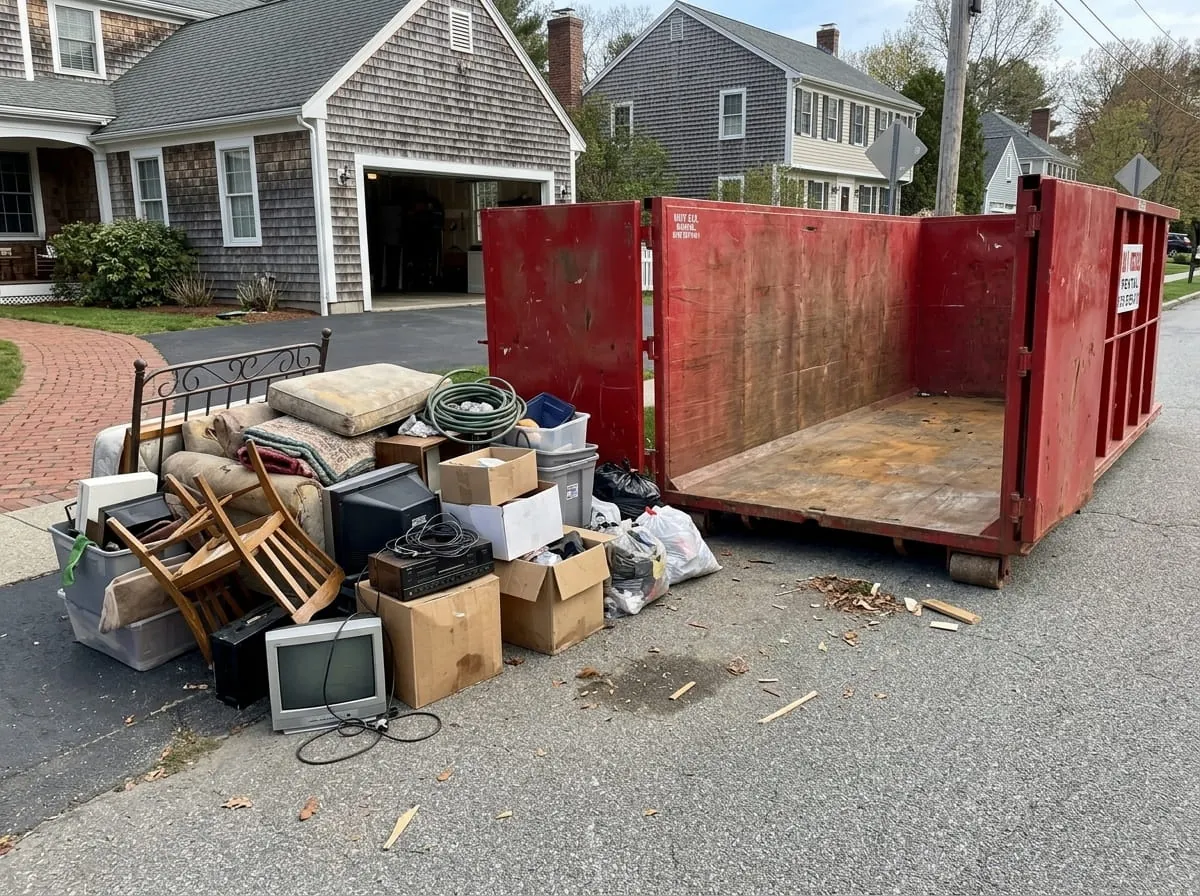
One of the first questions we hear from homeowners and contractors across the Merrimack Valley is a simple one: “Do I need a permit to put a dumpster at my place in Haverhill?” It’s a smart thing to ask before your project starts, because the answer changes depending on where the container sits. Getting it wrong can mean a knock on the door, a fine, or a scramble to move a loaded roll-off. Getting it right is usually easy.
Here’s the short version, and then we’ll walk through the details so you can plan your cleanout, remodel, or roofing job with confidence.
The Quick Answer: It Depends on Where the Dumpster Sits
In most cases, the rule of thumb in Haverhill and the surrounding Merrimack Valley works like this:
- On your own driveway or private property — generally no permit needed. The dumpster sits on land you control, so the city usually isn’t involved.
- On a public street, curb, sidewalk, or right-of-way — you’ll likely need a permit from the City of Haverhill before the container goes down.
That’s the framework. The moment your dumpster touches public pavement — the travel lane, a parking space, the strip between sidewalk and street — you’re using space that belongs to the city, and that typically requires permission. Because rules and fees can change, we always tell customers to confirm the current requirements directly with the City of Haverhill before placing a container in the road.
Not Sure Where Yours Will Go? We’ll Help You Figure It Out
You don’t have to become a permitting expert overnight. When you book a residential dumpster rental with us, we’ll talk through your driveway, your street, and the safest spot to set the container so you avoid surprises. Call (978) 519-7313 and we’ll point you in the right direction.
Why Do Dumpster Permits Exist in the First Place?
Permits can feel like red tape, but there’s real logic behind them — especially in an older New England city like Haverhill, where downtown streets were laid out long before roll-off trucks existed. A permit lets the city:
- Keep traffic moving. A container in a narrow travel lane or on a blind corner can be a genuine hazard. The city needs to know it’s there.
- Protect public safety. Rules often cover reflective markings, lighting at night, and clearance so pedestrians and cyclists stay safe.
- Manage parking and access. On tight downtown blocks, one dumpster can eat a parking space or block a hydrant. Permitting helps coordinate that.
- Protect the pavement. Heavy loaded containers can mark or crack the road surface. The city tracks who placed what, and where.
Think of a street permit as a short-term lease on a slice of public space. You’re borrowing part of the road, so the city wants it marked, safe, and gone by the agreed date.
How the Permit Process Generally Works
If your project truly needs the container in the street or right-of-way, the process in Haverhill is usually handled through the city — often the Department of Public Works and/or the licensing side of City Hall. While we can’t quote exact fees or turnaround times (those are set by the city and can change), the general path tends to look like this:
- Reach out to the City of Haverhill to ask which department handles temporary street or right-of-way obstruction permits for dumpsters. Start at the city’s official site: cityofhaverhill.com.
- Provide the basics — the property address, where the dumpster will sit, the size of the container, and how long you’ll need it.
- Pay any applicable fee and receive your approval. Some cities also ask about placement near hydrants, corners, or bus stops.
- Follow the placement rules — reflectors, markings, or lighting may be required, along with a firm end date.
Always verify the exact steps, forms, and costs with the city directly, since a blog can’t promise what a municipality decides. When in doubt, a quick call to City Hall — or to us at (978) 519-7313 — saves a lot of guesswork.
Downtown Haverhill and the Merrimack Valley Reality
Haverhill’s historic core — the blocks around Washington Street, Merrimack Street, and the riverfront — is exactly the kind of tight, older layout where street placement gets complicated. Narrow lanes, on-street parking, one-way stretches, and busy foot traffic all mean a curbside container needs to be planned carefully. The same holds across much of the Merrimack Valley, from Bradford’s residential streets to the denser pockets near the downtown.
In the leafier neighborhoods and newer subdivisions, driveways tend to be wider and permitting is often a non-issue. But if you live in a triple-decker with no off-street parking, or you’re renovating a downtown storefront, street placement — and a permit — may be unavoidable. A roll-off dumpster rental can still work beautifully in these spots; it just takes a little more coordination.
Don’t Forget HOAs and Private Communities
Even when the city doesn’t require a permit for your driveway, your homeowners association or condo association might have its own rules. Some HOAs across the region limit how long a dumpster can stay, where it can be placed, what size is allowed, or require advance notice to the board. If you live in a managed community, check your HOA guidelines before the container arrives — it’s a lot easier than moving it after a complaint.
Renting? Give your landlord or property manager a heads-up too. A five-minute conversation now prevents an awkward one later.
Smart Tips to Keep It Simple (and Legal)
Over the years helping Haverhill homeowners and contractors, a few habits consistently make dumpster rentals smoother:
- Use your driveway whenever possible. It’s the single easiest way to sidestep the permit question entirely. Most standard residential containers fit comfortably on a typical driveway.
- Protect the surface underneath. Placing boards or planks under the dumpster’s contact points helps guard against scuffs and cracks. Our guide on how to protect your driveway during a dumpster rental walks through exactly how.
- If it must go on the street, keep it legal and visible. Get the permit, keep reflectors or markings in place, don’t block hydrants, corners, or crosswalks, and stick to the approved dates.
- Right-size the container. A dumpster that’s too big may not fit the driveway and forces a street placement you didn’t need. Ask us to help match the size to your project.
- Plan the drop-off angle. Clear space, move cars, and trim low branches so the truck can set the container cleanly on private property.
How We Make Permits a Non-Issue
At Haverhill Dumpster Rental Group, we do this every day, so we know the local quirks. When you call, we’ll ask about your property, look at whether the driveway can hold the container, and flag early if we think street placement — and a city permit — might come into play. If it does, we’ll explain the general process and point you to the right city contacts so you can confirm the details. We can’t issue the permit for you, but we can make sure you’re not caught off guard.
Want to see everything we offer around the Merrimack Valley? Browse our full lineup of dumpster rental services, or reach out directly through our contact page and we’ll get you set up.
The Bottom Line
For most Haverhill projects, if your dumpster sits on your own driveway or private property, you generally won’t need a permit. The moment it needs to sit on a public street, curb, or right-of-way — common on those tight older downtown blocks — you’ll likely need one from the City of Haverhill, and you should confirm the current requirements and fees with the city. Factor in any HOA rules, use boards to protect your surface, and keep street-placed containers marked and legal.
Still not sure which category your job falls into? That’s what we’re here for. Call Haverhill Dumpster Rental Group at (978) 519-7313 and we’ll help you place your dumpster the right way — permit or no permit — from the very first delivery.

Founder, Haverhill Dumpster Rental Group — sharing straight advice from more than 15 years of local hauling experience.