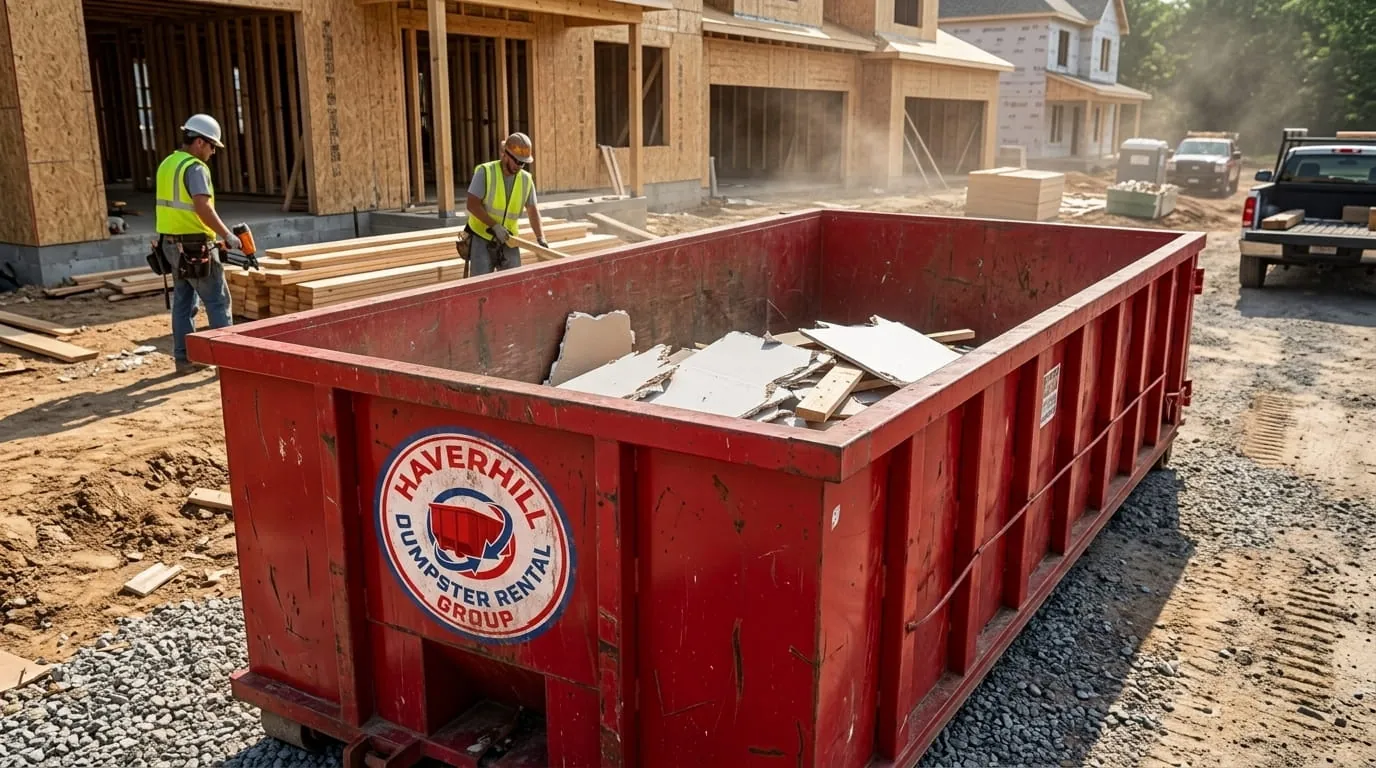
Construction Debris Disposal in Haverhill, MA: A Builder's Field Guide
Every framing, demo, or remodel job ends the same way: a pile of debris that has to go somewhere. Do it wrong and you're paying overage fees, tripping OSHA inspectors, and losing hours to a cluttered site. Do it right and disposal becomes a quiet line item you barely think about. This guide walks Merrimack Valley contractors through construction debris disposal in Haverhill MA the smart way — sorting your loads, matching the container to the material, keeping the site clean, and diverting what can be recycled.
Know Your Waste Stream: What C&D Debris Actually Is
Construction and demolition (C&D) debris isn't one thing. It's a mix of materials with very different weights, recycling paths, and hauling rules. Before you rent a single container, it helps to picture the categories you'll be generating on the job:
- Clean wood — dimensional lumber, plywood offcuts, engineered joists. Light and often recyclable when it's free of paint, laminate, and hardware.
- Drywall — gypsum board scrap. Bulky but light; can be ground and diverted at facilities that accept it.
- Metal — ductwork, conduit, rebar, flashing, old fixtures. Heavy but valuable; almost always recyclable.
- Concrete, brick & masonry — footings, block, slab, mortar. Extremely heavy. This is the category that gets contractors in trouble.
- Roofing — asphalt shingles, felt, tear-off. Dense and heavy per square foot; a full re-roof fills a container faster than you'd expect.
The reason the categories matter is simple: weight and material type drive both your cost and which container you're allowed to use. A dumpster full of clean wood behaves nothing like the same box packed with concrete.
Sorting on the Job Site Pays for Itself
Sorting sounds like extra labor until you've watched a single mixed load get downgraded at the transfer station. Keeping clean wood, metal, and masonry separated does three things: it raises your recycling diversion, it keeps heavy material out of the wrong bin, and it makes your loads more predictable so you're not guessing at swap timing. On a tight lot, even a few labeled zones or a couple of rubble sacks staged near the container can keep the streams clean without slowing the crew down.
Roll-Off vs. Dedicated Heavy-Debris Bins
Here's the single most common mistake we see: a builder loads a slab tear-out or a chimney demo into a standard 30-yard roll-off, then can't understand why it can't be hauled. A roll-off has a volume limit and a weight limit, and concrete hits the weight limit long before it fills the box.
A standard roll-off is built for volume — framing scrap, drywall, packaging, mixed remodel debris. Concrete, brick, dirt, and asphalt are built for a dedicated heavy-debris bin, which is sized smaller precisely because the material is so dense.
Use the quick reference below to match the material to the right container before you order.
| Material | Best Container | Why |
|---|---|---|
| Framing scrap, drywall, mixed remodel debris | Standard roll-off (20–30 yd) | High volume, moderate weight |
| Clean wood only | Standard roll-off | Light; easy to divert for recycling |
| Scrap metal | Roll-off or separate metal load | Heavy but recyclable; keep it clean |
| Concrete, brick, block, asphalt | Dedicated heavy-debris bin | Weight limits, not volume, control the load |
| Roofing tear-off | Roll-off (watch the tonnage) | Dense per cubic yard; fills weight fast |
If your project mixes both — say, a kitchen gut with a concrete stoop removal — the cleanest approach is two containers. Our construction dumpster rental and concrete & heavy debris services are built to run side by side so you never overload the wrong box. For full tear-downs, our demolition debris removal handles the mixed volume that comes off a structure.
Recycling and Diversion: The MA C&D Context
Massachusetts has long pushed to keep recoverable C&D material out of the disposal stream, and several common job-site materials fall under that diversion effort. You don't need to memorize regulations to benefit — you just need to keep the recyclable streams clean and let your hauler route them correctly.
- Clean wood can be chipped for mulch, biomass, or reprocessing when it's free of paint and hardware.
- Metal is one of the most reliably recycled materials on any site — separate it and it rarely goes to waste.
- Concrete, brick, and masonry can be crushed and reused as aggregate or fill, which is why a dedicated heavy-debris bin isn't just about weight — it keeps the material recoverable.
- Asphalt shingles are recoverable in many markets when kept separate from other debris.
The practical takeaway for a Haverhill contractor: the more you sort at the source, the more of your load gets diverted rather than dumped, and the cleaner your paperwork looks if a GC or owner ever asks about disposal practices. We handle the routing on our end — your job is to keep the streams from getting cross-contaminated in the container.
A Clean Site Is a Safe, OSHA-Tidy Site
Debris management is a safety issue before it's a cost issue. Loose material underfoot is a trip hazard, protruding nails and metal are puncture risks, and a blocked egress path is exactly what an OSHA inspector looks for first. Good housekeeping is one of the cheapest ways to keep a crew safe and a site inspection-ready.
Simple Habits That Keep a Job Site Clean
- Stage the container smart. Position the roll-off close to the work but clear of egress routes and vehicle paths.
- Clean as you go. End-of-day debris sweeps beat one massive cleanup that eats a half-day of labor.
- Break down bulky material. Flattening and cutting maximizes container space and reduces the number of swaps.
- Keep sharps controlled. Nails, banding, and metal offcuts go in the bin, not on the ground.
- Load evenly. Don't pile heavy material to one side — even loading keeps the container safe to haul.
A tidy container also loads more efficiently, which means fewer swaps and lower cost. Cleanliness and economy pull in the same direction here.
Planning Container Size and Swap Cadence
Sizing is where experience saves money. Order too small and you're paying for extra swaps; order too big for heavy material and you'll hit the weight limit with the box half full. For most Haverhill remodels and mid-size builds, a 30-yard dumpster is the workhorse — enough volume for framing, drywall, and general C&D without constant swaps. Reserve the smaller heavy-debris bins for concrete and masonry, where weight, not volume, is the constraint.
Swap cadence comes down to your project phase. Demo generates debris in fast bursts; finish work trickles it out. A good rule of thumb:
- Demo phase: plan for frequent swaps or a larger box — debris comes off fast.
- Framing/rough phase: steady volume, predictable weekly or twice-weekly swaps.
- Finish phase: lighter, less frequent — you may consolidate loads.
When you call, tell us the project type and phase and we'll help you right-size the container and set a swap rhythm that keeps the site clear without paying for air.
Flat-Rate Contractor Accounts
If you're running multiple jobs across the Merrimack Valley, per-pull pricing gets hard to budget. A flat-rate contractor account gives you predictable pricing, priority swaps, and one point of contact instead of re-quoting every project. For builders and remodelers who order containers month after month, it's the difference between disposal being a variable headache and a fixed, known cost. Ask us about setting one up when you get in touch.
Get the Right Container on Your Site
Disposing of construction debris the right way isn't complicated — it's sorting your streams, matching the material to the container, keeping the site clean, and planning your swaps. Get those four things right and disposal stops being a problem you fight and becomes a system that runs itself. Haverhill Dumpster Rental Group serves builders and remodelers across the Merrimack Valley with the containers, timing, and flat-rate accounts to keep your jobs moving.
Ready to order or need help sizing a container? Call Haverhill Dumpster Rental Group at (978) 519-7313.

Founder, Haverhill Dumpster Rental Group — sharing straight advice from more than 15 years of local hauling experience.